NASA Lays Out Artemis III Plan to Test Two Lunar Landers in Orbit
Seven Lights
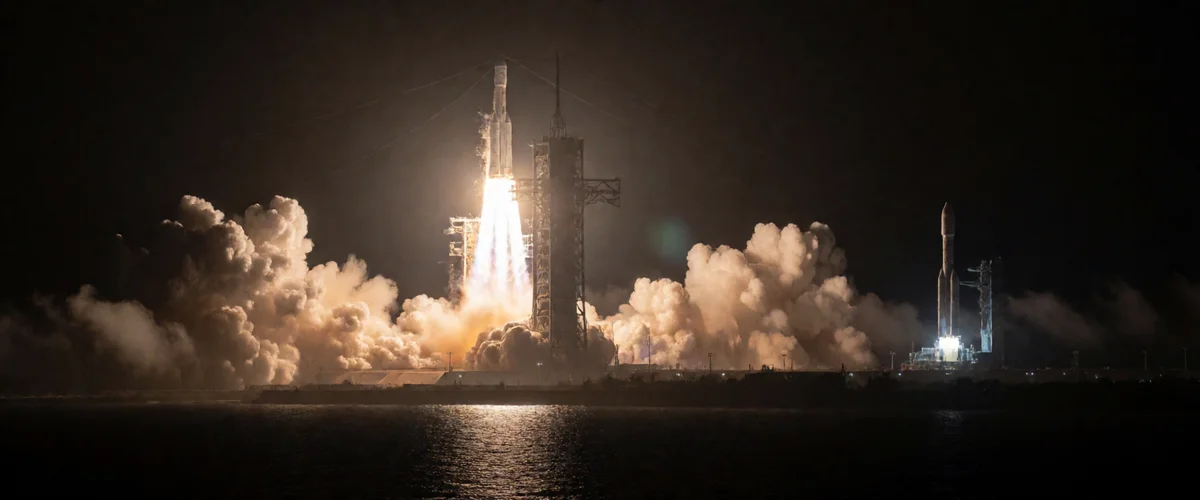
NASA said the Artemis III mission, scheduled to launch in 2027, will spend about 14 days in low Earth orbit testing rendezvous, docking and habitation procedures with test versions of the two lunar landers now in development, ahead of a crewed landing planned for 2028.
The mission will carry NASA astronauts Randy Bresnik, Frank Rubio and Andre Douglas, with Luca Parmitano of the European Space Agency, aboard the Orion capsule. Three spacecraft will fly on three different rockets. Blue Origin will first launch a test article of its Blue Moon Mark 2 lander on a New Glenn rocket into a circular orbit about 273 miles above Earth, where the vehicle can remain for up to 30 days. Orion will follow on a Space Launch System rocket from Kennedy Space Center, modified to fly without its upper stage because the mission stays in Earth orbit.
After checkout, Orion will raise its orbit and rendezvous with the Blue Moon vehicle within days. The crew will dock, open the hatch and spend about two days evaluating the lander’s cabin, controls, life-support systems and avionics in space — the first crewed assessment of a commercial lunar lander. Engineers will also verify the vehicle’s ability to hold atmosphere and pressure.
On about day six, SpaceX will launch a Starship Version 3 test article into a lower orbit at 206 nautical miles. Orion will undock from Blue Moon, adjust its orbit and perform a second docking with Starship, expected to last up to two hours; the crew will not enter that vehicle. The campaign will exercise two docking geometries, a port beside Blue Moon’s crew cabin and a forward port on Starship’s nose.
NASA administrator Jared Isaacman said the mission would serve as a tiebreaker between the two landers, though both companies are planning lunar landing missions in 2028 and only one will fly Artemis IV, the mission that returns astronauts to the surface near the lunar south pole. Program manager Jeremy Parsons said each day of the flight “is built around specific tests that reduce risk.”
Hurdles remain. New Glenn has not flown since one of its vehicles exploded in May; Blue Origin expects to resume launches in November, and NASA has no contingency for carrying Blue Moon on another rocket. SpaceX put Starship into orbit for the first time in its most recent test and plans another next month with upgraded Raptor engines.
The optimal flight lasts 14 days and can be stretched to 17. Launch is expected in the summer of 2027, with no window announced.