Jordan Strikes Militant Hideouts in Syria After Church Attack
Seven Lights
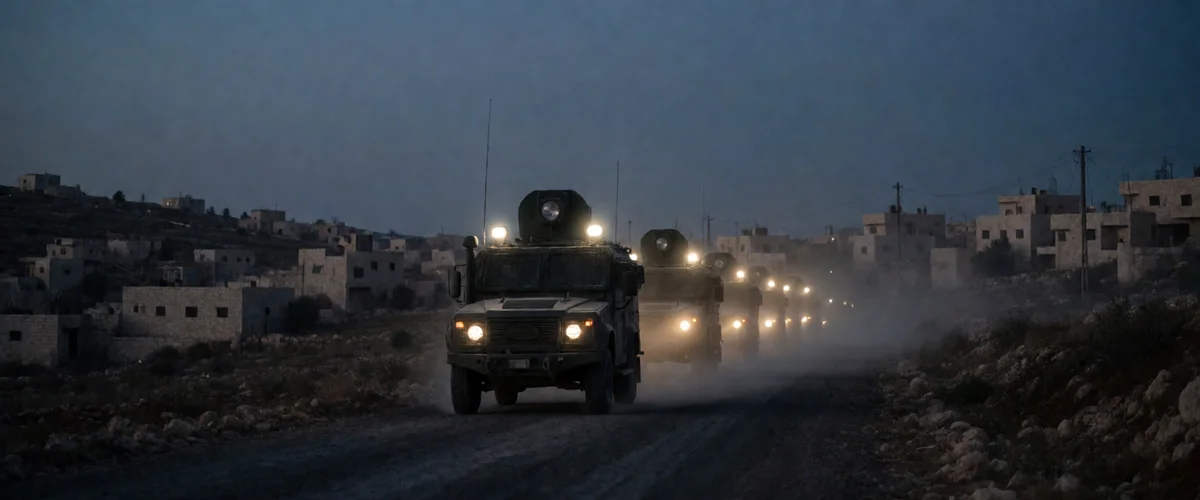
Jordan said on Monday its air force struck militant hideouts in southern Syria, after determining that the suspects behind Friday’s attack on a Greek Orthodox church that killed nine people were linked to “terrorist groups” operating there. The armed forces said the operation was conducted in coordination with Damascus.
Syria’s government gave a contradictory account. Its foreign ministry said Damascus had informed Amman of its “complete reservation” over strikes carried out without prior coordination, and that it had opened an investigation into the Jordanian attacks. The Syrian Civil Defence said seven people, including three children and a woman, were killed and three wounded at four sites hit in the countryside of Daraa and Sweida provinces. Jordan had no immediate comment on that account.
Syria closed the Nassib border crossing, its only passenger and commercial link with Jordan, on Tuesday, suspending traffic in both directions and citing developments in Daraa province.
The airstrikes followed the arrest of three men suspected of Friday’s attack at St George’s Greek Orthodox Church in the village of Hmoud, in Karak governorate. The Public Security Directorate said the men were located before dawn inside an abandoned house, refused to surrender and opened fire; security forces returned fire and wounded all three. No security personnel were hurt. Senior officials said the three — two brothers and a brother-in-law — were detained after the shootout.
No group has claimed responsibility for the attack on a funeral, which killed nine Christians and injured 34 people. Verified video showed three armed men firing on the church in an assault witnesses said lasted about 15 minutes. Eight of the victims were buried beside the church on Sunday.
King Abdullah II, who ordered security forces to respond with an “iron fist,” praised them for pursuing the suspects “to the very end.” “We vowed the terrorists would not escape punishment, and no proponent of dark ideologies that divide Jordanians will be tolerated,” he wrote on X.
Interior Minister Mazen al-Faraya said the “file has not yet been closed” and that investigators had so far found no indications of links between the suspects and other cells. Jordan’s director of public security, Major-General Obeidallah al-Maaytah, said the detainees “only represent themselves.”
Violence of this kind is rare in Jordan, a relatively stable United States ally. The kingdom’s Christian community is small but ancient, and Karak is home to a sizeable one. The government said it would examine “every factor that leads youth toward extremism.”