Xreal Opens Preorders for Aura Glasses Running Google's Android XR
Seven Lights
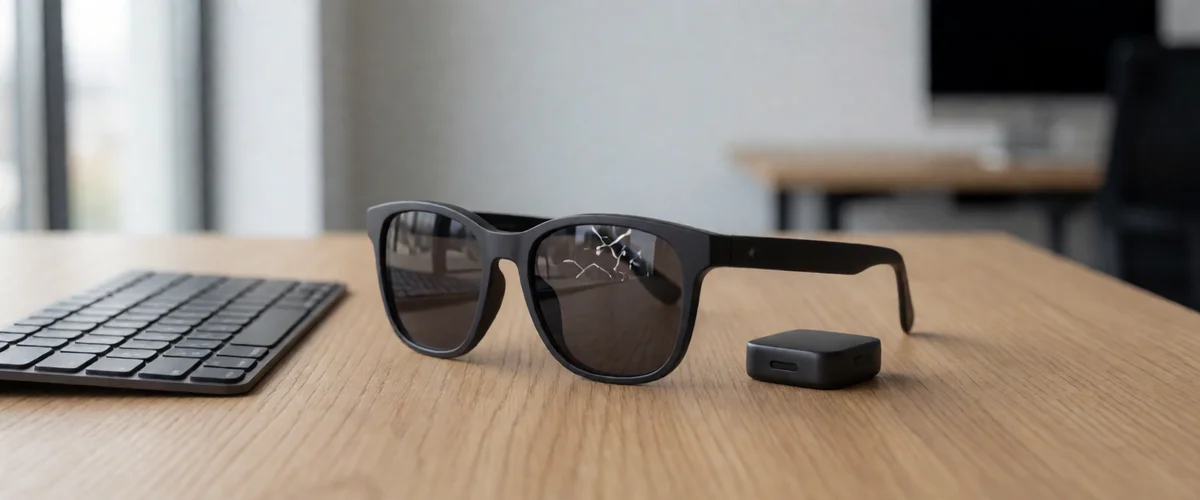
Xreal began taking preorders Wednesday for the Aura, a pair of extended-reality glasses built on Google’s Android XR platform, with deliveries scheduled for mid-November, Mashable reported. The glasses cost $1,279; early orders receive a $180 discount.
The announcement came as Google presented Android XR work at its Android Dev Summit. Xreal is the platform’s lead hardware partner, and the Aura combines elements of augmented and virtual reality rather than the see-through overlay used by simpler smart glasses.
Dual Sony micro-OLED displays create a virtual screen with a 70-degree field of view, 1200p resolution — 1,920 by 1,200 pixels per eye — up to 1,050 nits of brightness and refresh rates to 120Hz. The glasses carry four microphones and run on Xreal’s own X1S processor. Onboard sensors and cameras allow control by voice and hand movement, alongside keyboard, trackpad and game-controller input. The lenses dim electrochromically across five levels, sound is tuned by Bose, and the glasses weigh under 95 grams. A separate puck, housing the battery and most of the spatial-computing power, connects to the glasses rather than a phone or laptop.
“Xreal Aura is finally here, and we’re so proud to unlock new ways for people to work, watch, play, and build,” said Chi Xu, Xreal’s co-founder and chief executive.
Gizmodo noted the price places the Aura within reach of Meta’s headset line, which shares several of the same specifications, including a 70-degree field of view and a compute puck, and framed the launch as the opening round of a contest between the two companies in mixed reality. TechCrunch stressed the wired design: the Aura is a tethered headset, not the lightweight all-day glasses the industry has long promised, and at under 95 grams it is heavier than Meta’s 69-gram smart glasses.
The mid-November shipping date puts the Aura in the market ahead of the holiday season and gives developers their first general-purpose Android XR hardware to build for. Xreal sold the glasses initially through its own website, with retailer listings to follow.