NASA Asks Commercial Industry to Rescue Hubble, or Guide It Down
Seven Lights
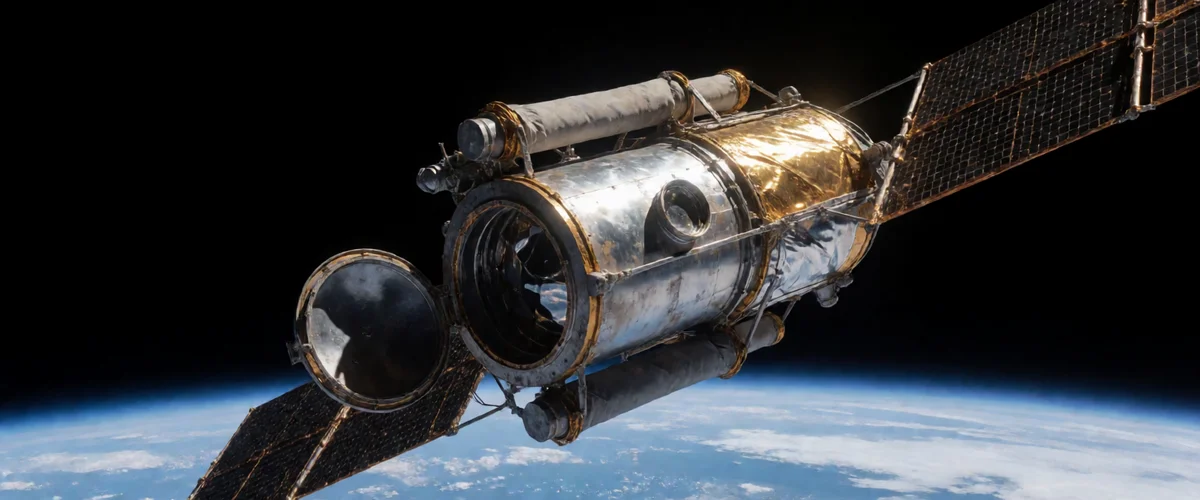
NASA issued a request for information on October 29 asking the commercial space industry to propose ways to raise the orbit of the Hubble Space Telescope and service it, and to plan a controlled deorbit if rescue proves beyond reach. Proposals are due November 30.
The observatory, launched into low-Earth orbit in 1990, has been sinking ever since. Atmospheric drag at its altitude of a few hundred miles drags its path lower year by year, and the drift was a problem before the telescope ever flew: the space shuttle Columbia lifted Hubble slightly higher during a servicing mission in 2002, buying years rather than decades. With the shuttle fleet retired and its gravity-carrying cargo bays in museums, the agency no longer owns a spacecraft able to reach and re-boost the observatory, which is why it has turned to private industry.
The request covers two paths. A servicing and re-boost mission would restore Hubble’s altitude, tend its gyroscopes and instruments, and extend a research record that spans more than three decades of foundational measurements of the universe. A controlled deorbit would instead end the mission deliberately, guiding the 11-ton observatory into a reentry over remote ocean rather than leaving its descent to chance and the solar cycle.
Neither step is a commitment. The notice seeks industry concepts and pricing, the first formal stage toward any contract. Hubble’s operators have long said the telescope’s instruments remain scientifically productive even as its hardware ages, and the agency has previously weighed robotic servicing concepts that found no funding.
The countdown is orbital, not editorial. Solar activity heats and expands the upper atmosphere, thickening drag at Hubble’s altitude, and reentry estimates have narrowed over the years to a window in the next decade or so without intervention. Whether the rescue comes from a commercial capsule, a purpose-built tug, or not at all will depend on what the proposals submitted by month’s end show to be feasible, and affordable.