Polish President Enters Constitutional Tribunal as Riot Police Move In
Seven Lights
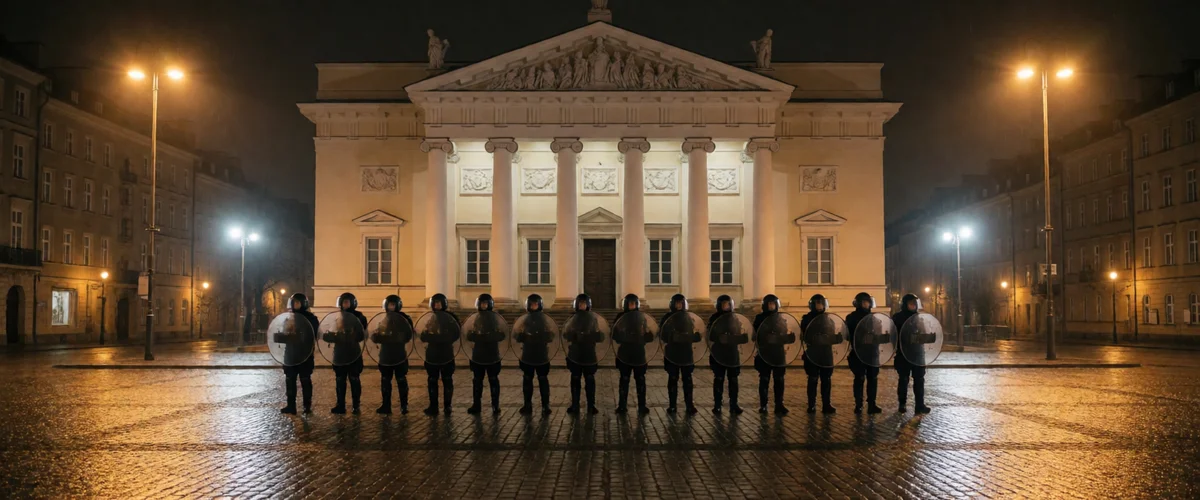
Riot police were deployed around Poland’s Constitutional Tribunal in Warsaw over the weekend as the government of Prime Minister Donald Tusk moved to strip the court’s president and vice-president of their immunity from prosecution, touching off the sharpest confrontation yet over the country’s judiciary.
Justice Minister Waldemar Żurek said he had requested the removal of the immunity of the tribunal’s president, Bogdan Święczkowski, and its vice-president, Bartłomiej Sochański, so that criminal charges could be brought against them. Żurek has said the two should face charges for preventing judges from adjudicating. Tusk defended the step on Friday as supporters of the opposition Law and Justice party, PiS, gathered outside the court premises in protest.
Police stepped up security after dozens of demonstrators gathered on Friday to oppose the government’s suspension of the tribunal’s president, which they call unlawful. Officers said several people were detained after some protesters breached the court’s perimeter fence. Święczkowski appeared before reporters near the building, holding up an identity document.
President Karol Nawrocki, backed by PiS, entered the tribunal building, according to his chief of staff. He cancelled a flight to Senegal mid-air, where he had been due to attend the Summer Youth Olympic Games in Dakar. Riot police were posted to keep demonstrators out of the building. The tribunal said in a social media post that the two judges the government seeks to prosecute remained the legally appointed senior justices of the court, and warned that those taking part in the government’s actions were committing a crime.
The dispute pits Tusk’s government against the judicial changes enacted during PiS’s years in power. European courts have ruled that a PiS majority elected three judges to the tribunal improperly, filling seats already validly occupied, and that the body was no longer an “independent and impartial tribunal”. Tusk’s government has used those rulings as grounds to stop publishing the tribunal’s decisions. The Council of Europe’s Venice Commission said this month that Nawrocki should swear in judges elected by parliament so they can take their seats. Nawrocki has refused to swear in five tribunal judges chosen since March, citing flaws in their selection; one of them, Anna Korwin-Piotrowska, has been placed in temporary charge of the court.
Criticism of the government’s move came even from allies of judicial reform. Marcin Matczak, a lawyer who calls Święczkowski the court’s worst president, wrote that the suspension had no legal basis “for a million reasons” and that “images of armed police” would produce “a powerful, anti-rule of law backlash for years to come.”
Parliamentary elections fall next year. The tribunal’s leadership said the standoff would be contested in court.