Bomb Threats Disrupt European Flights
Seven Lights
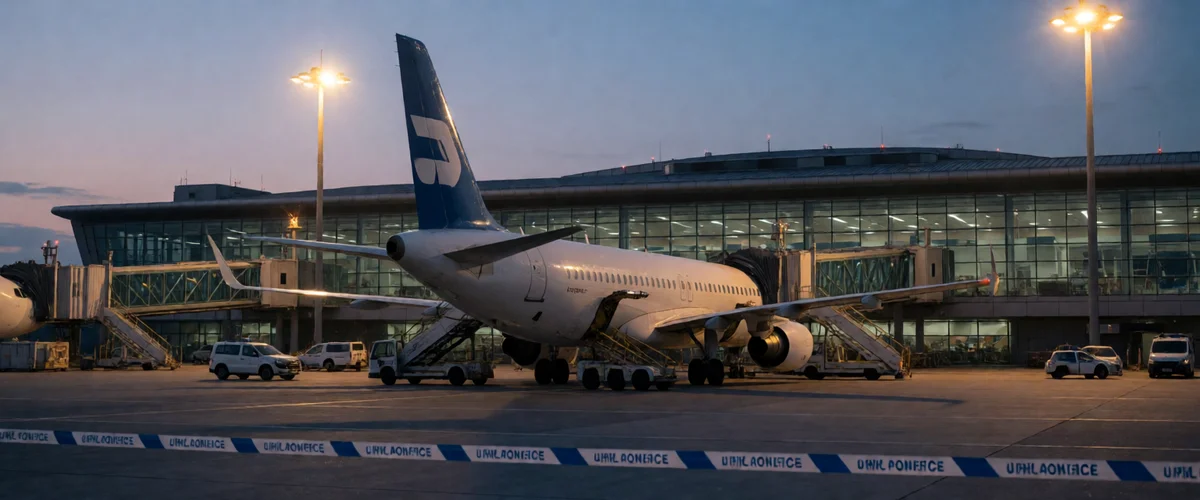
European aviation authorities began reviewing their response to a week of hoax bomb threats after an email sent to broadcasters on Friday claimed the group behind the flight hoaxes had also placed bombs in news buildings, prompting evacuations that found no devices.
The message, presented as coming from the group’s leader, said “What happened this week is just a small part of what awaits Europe in the near future,” according to Reuters. The agency could not verify the sender, the emails’ origin or any link to the flight threats.
Authorities have described the more than two dozen threats this week as malicious hoaxes; no attack has been carried out. The alerts forced diversions, emergency landings and military escorts across European airspace, including the diversion of Aer Lingus’s Dublin-to-Rome flight on Thursday and the emergency landing of a LOT Polish Airlines jet at Brussels.
Security specialists said the campaign differs from past copycat threats. “This is really quite exceptional, I’ve never seen this before in my whole career,” said Wilfried Covent, an aviation security consultant. “What we see now is a systematic attack on airlines and airports.” Many security analysts suspect state-backed actors, though none have been identified, CNBC reported.
The threats succeed because the rules leave no discretion. A warning against a specific flight number in the air “triggers international regulations which ensure you don’t ignore it — it means a quick landing, evacuation and searches by specialist forces,” Mr. Covent said. Airline assessors grade a threat red, amber or green, but an amber verdict is never given if the plane is airborne, said Joji Waites of the British Air Line Pilots Association. When a threat is judged credible, the captain takes command and lands as soon and as safely as possible.
The cost accumulates through the schedule. A single diversion can cost an airline as much as $250,000 in replacement crews, missed connections and knock-on disruption, Philip Baum of Coventry University told the AP. An EASA spokesperson said the immediate safety threat is low because staff are trained, but “the higher number of diversions places an additional strain on the system.”
Responsibility for hoaxes is split. National authorities assess threats with airport operators, airlines and law enforcement; air traffic control finds affected aircraft a place to land; the European Union Aviation Safety Agency and Britain’s Civil Aviation Authority set safety rules; the European Commission coordinates policy among member states.
National governments are reviewing their aviation authority regulations and frameworks, with discussions expected at European and global levels, said John Edwards of Gates Aviation in London. Authorities must establish what is different about this week’s wave and why so many threats were treated as credible, he said.