Google puts its Pixel Tag tracker on sale at $29.99
Seven Lights
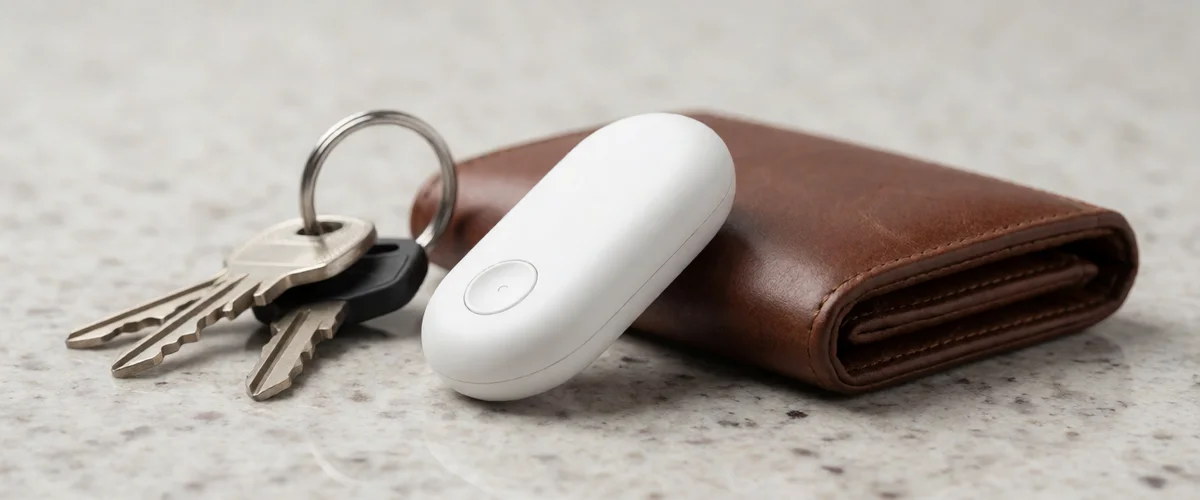
Google began selling the Pixel Tag on Tuesday, a $29.99 lost-item tracker that gives Android users a first-party alternative to Apple’s AirTag and completes the hardware lineup for its Find Hub network.
First announced in August, the Pixel Tag connects over Bluetooth and ultra-wideband radio. The combination lets owners of Android phones, tablets and the Pixel Watch locate a missing item through on-screen distance and directional guidance rather than a map alone. The tracker works with Find Hub, the network Google renamed from Find My Device last year, which crowdsources locations from nearby Android devices.
The tag carries a built-in speaker that can play a chime to help an owner find an item nearby, with three volume settings; at maximum the speaker reaches roughly 80 decibels, according to TechCrunch. The function runs both ways: pressing the tag’s button twice rings the paired phone, a convenience Apple’s AirTag added only in its second-generation model. Google settled on an oval form, slimmer and more elongated than Apple’s disc. The tag measures 1.1 inches wide, 1.8 inches high and 0.2 inches thick, and weighs 0.4 ounces with its battery installed. A physical button on the face replaces the whole-device press gestures of rival trackers.
TechRadar compared the Pixel Tag with the two leading Find Hub partners, Motorola’s Moto Tag 2 and Samsung’s Galaxy SmartTag 2, and judged Google’s hardware competitive on range and precision. The Verge noted that Google enters the market years after Samsung, Motorola and Pebblebee shipped trackers for its network, and that the first-party device brings the software and hardware under one roof for the first time.
CNET, in an early hands-on report, called the Pixel Tag “the AirTag for Android fans” and judged the precision-finding interface the strongest yet in Google’s ecosystem.
The Pixel Tag is on sale in the United States through Google’s store and major retailers. Google said the tracker will work with all Find Hub-compatible Android devices; the precision-finding features require ultra-wideband hardware in the phone.