Canada's Top Court Upholds Quebec Ban on Religious Symbols
Seven Lights
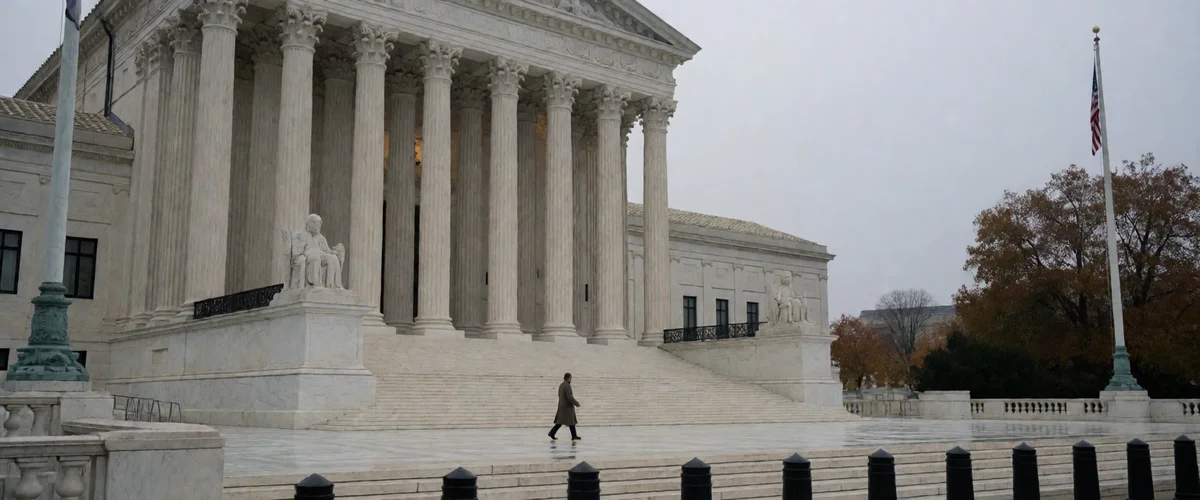
The Supreme Court of Canada ruled on Friday to uphold most of Quebec’s law barring public-sector workers from wearing conspicuous religious symbols, confirming the province’s power to shield the statute from charter challenges by invoking the notwithstanding clause.
In a 6-1 decision, the court found Quebec was permitted to override certain charter rights to preserve the law, known as Bill 21. “Bill 21 is rooted in Quebec’s legitimate and historical commitment to ensuring the laicity of the state in a free and democratic society,” Chief Justice Richard Wagner wrote for the majority.
Passed in 2019, the law bars workers in positions of authority, including teachers, police officers, lawyers and judges, from wearing religious symbols such as the hijab, turban, kippah or a conspicuous cross while on the job. The court struck down a single provision, ruling that it infringed the rights of members of Quebec’s National Assembly whose religious beliefs require them to wear a face covering.
The case was among the most heavily litigated in the court’s 151-year history. Hearings ran four days and 51 interveners took part, including six provincial attorneys general. The court’s website crashed Friday morning as the judgment was published.
Central to the dispute was the notwithstanding clause, a compromise reached when Canada repatriated its constitution in the 1980s. It allows federal or provincial governments to suspend certain charter guarantees, including religious freedom, equality and speech, for five years at a time; a government must face voters before renewing it. Voting rights and language rights cannot be overridden. Quebec invoked the clause to protect Bill 21 from the outset.
The ruling drew immediate condemnation from civil-liberties and religious groups. Stephen Brown, chief executive of the National Council of Canadian Muslims, called the decision “an unrestricted licence for every government in this country to pass legislation taking away the fundamental freedoms and the legal rights of every Canadian.” He said the law had driven many Muslim women from teaching posts and left some unable to volunteer at their children’s schools. “If that is the case, we don’t have a charter of rights and freedoms. We have a charter of suggestions and permissions,” Brown said.
In Quebec, supporters of the law treated the decision as a vindication of the province’s secular tradition. The judgment is a political win for the sovereigntist provincial government and may complicate the efforts of Prime Minister Mark Carney to present a united front as Canada confronts a trade war and annexation threats from the United States.
Provincial governments outside Quebec, several of which intervened against the law, are reviewing the judgment. The court suspended no part of the statute beyond the face-covering provision, leaving it in force for tens of thousands of public employees.