Seven Lights Daily Brief - October 31, 2026
· Episode runtime 10 min 15 s
Subscribe on Apple Podcasts · RSS feed · Spotify
About this episode
Intel shares fall 29 per cent, their worst day since the 1970s, after weak guidance erases about 140 billion dollars in value. The State Department approves a 2.1 billion dollar sale of 500 Patriot interceptors to Ukraine, a federal judge bars Justice Department threats to election workers days before the midterms, and the Alaska Senate race draws subpoenas and a ballot-segregation request.
Today's stories
A ten-minute briefing on Friday’s biggest stories: Intel’s twenty-nine per cent share plunge, its worst single day since the nineteen seventies, after weak guidance on personal computer chips and plant shutdowns in Israel erased roughly one hundred forty billion dollars in value and dragged the S and P five hundred to its worst day since June; the State Department’s approval of a two point one billion dollar sale of five hundred Patriot P A C three interceptors to Ukraine, funded entirely by European and Canadian partners, while President Zelensky warns deliveries could take years; a California federal judge barring the Justice Department from threatening election workers or demanding ballot segregation three days before the midterm elections; dozens of federal subpoenas and an emergency ballot-segregation request in the Alaska Senate race over a look-alike candidate; Pope Leo the Fourteenth becoming the first pope known to vote in a United States election by mail ballot from the Vatican; DoorDash’s seventeen billion dollar agreement to acquire Instacart, consolidating grocery delivery; Christa Pike’s first statement since surviving Tennessee’s attempted lethal injection; grid penalties for Max Verstappen and Liam Lawson after their Mexico City practice collision, with Kimi Antonelli near his first title; and Curry Barker’s return to YouTube with the Microsoft-sponsored horror short “Mama Bear.”
Stories in this episode
- Intel Shares Fall 29 Per Cent, Worst Single Day Since the 1970s
- United States Approves $2.1 Billion Sale of 500 Patriot Missiles to Ukraine
- Federal Judge Bars Justice Department From Threatening Election Workers
- Justice Department Issues Subpoenas in Alaska Senate Race
- Pope Leo XIV Casts First Ballot by a Sitting Pope in a US Election
- DoorDash to Buy Instacart for $17 Billion in Grocery Delivery Consolidation
- Christa Pike Releases First Statement Since Failed Execution
- Verstappen and Lawson Take Grid Penalties After ‘Clumsy’ Mexico Clash
- ‘Obsession’ Director Curry Barker Returns to YouTube With Horror Short ‘Mama Bear’
Transcript
From Seven Lights, this is your Daily Brief for Saturday, October thirty-first, twenty twenty-six.
Coming up on today’s show: Intel posts its worst share drop in decades. The United States approves a two point one billion dollar Patriot missile sale to Ukraine. A federal judge blocks Justice Department threats to election workers. Subpoenas rock the Alaska Senate race. Pope Leo the Fourteenth becomes the first pope to vote in a United States election. DoorDash agrees to buy Instacart for seventeen billion dollars. Christa Pike breaks her silence after a failed execution. Formula One teammates Max Verstappen and Liam Lawson take grid penalties in Mexico. And a YouTube horror phenom returns to the platform that made him.
Let’s get into it.
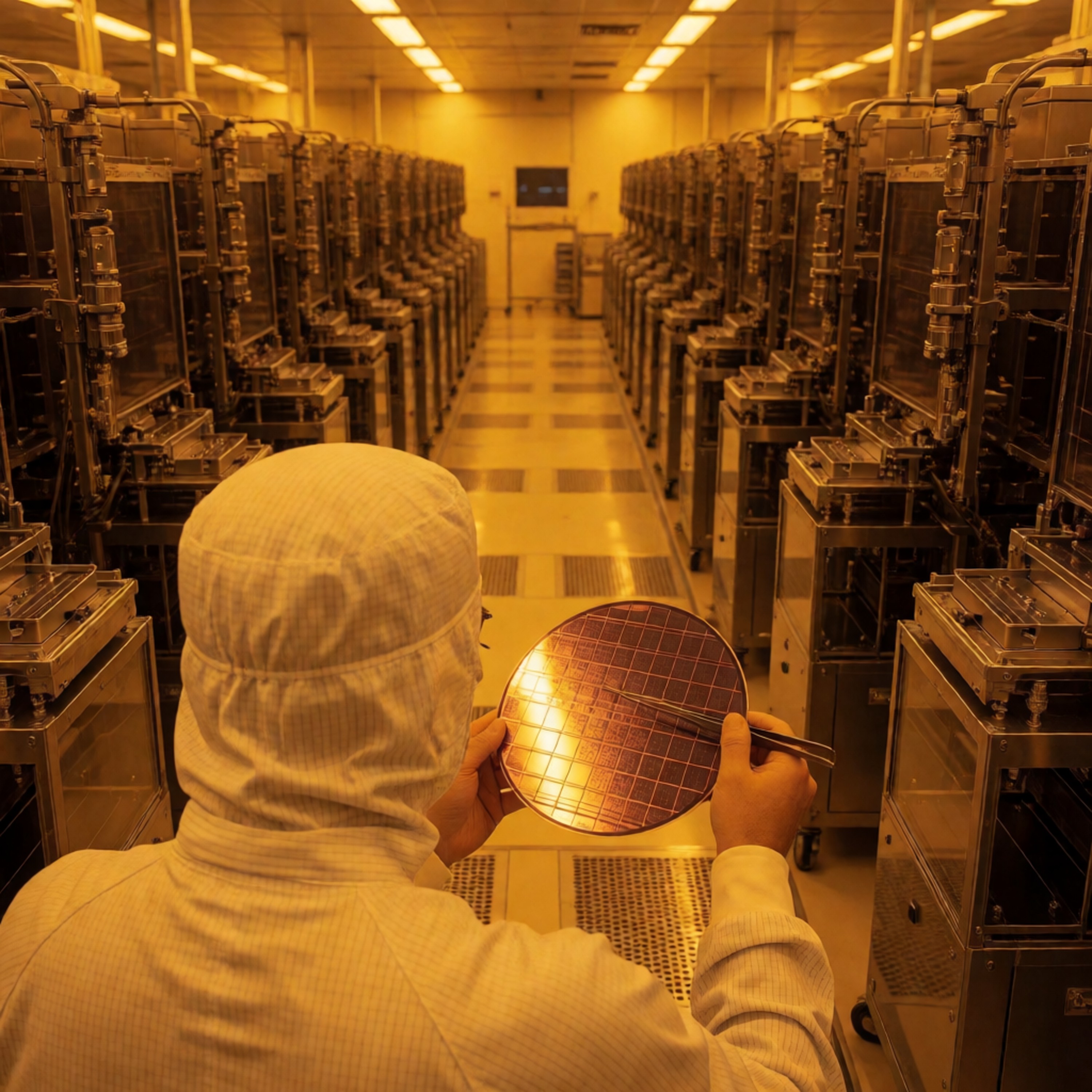
First story: Intel shares fell twenty-nine per cent on Friday, the chipmaker’s worst single day since the nineteen seventies. The plunge came after Intel guided to weaker revenue, blaming a soft market for personal computer chips and plant shutdowns in Israel, where the company runs fabrication facilities. The drop erased roughly one hundred forty billion dollars in market value in a single session, capping Intel’s steepest decline since nineteen seventy-four. It is a serious setback for chief executive Lip-Bu Tan, hired in March twenty twenty-five to restore the company’s standing in an industry that has moved toward the processors powering artificial intelligence, a market Intel largely missed. Washington’s stake took a hit too. The government bought a ten per cent equity interest in Intel a little over a year ago. CNBC reported that the holding lost about twelve billion dollars in value on Friday, though it remains profitable. The selloff spread beyond Intel. Amazon shares fell on a disappointing earnings report, Nvidia dropped four point two per cent on doubts about artificial intelligence spending, and the S and P five hundred recorded its worst day since June.
Next: The United States State Department has approved a possible two point one billion dollar sale of five hundred Patriot interceptor missiles to Ukraine. The P A C three missiles are designed to destroy incoming warheads by direct collision. The State Department said the purchase would be funded entirely by Ukraine’s allies, with no United States funds involved. Canada, Germany and Norway would provide donations through the Jumpstart program, with the remainder financed by national funds and the European Union’s Ukraine Support Loan. Lockheed Martin will be the principal contractor. President Volodymyr Zelensky welcomed the approval but warned that deliveries could take several years, saying Ukraine needs the missiles right now. He said Russia had carried out more than thirty strikes on critical parts of Ukraine’s power grid in the past two weeks, pressing attacks on energy infrastructure before winter. Patriot batteries are the only systems that have reliably downed Russian ballistic missiles, and Ukrainian officials say interceptor stockpiles are critically low. The announcement came as European diplomats at the twenty G foreign ministers’ meeting in Atlanta refused to stand for the group photograph with Russia’s foreign minister.
Next: A federal judge in California has barred the Justice Department from threatening election workers with criminal prosecution, three days before Tuesday’s midterm elections. Judge Trina Thompson also blocked demands that local officials separate or refuse to count ballots the government believes may have been cast by ineligible voters. She found that federal officials had likely violated the Voting Rights Act of nineteen sixty-five, which prohibits attempts to intimidate, threaten or coerce people who assist others in voting. One of the hallmarks of a fair election, Judge Thompson wrote, is the freedom to exercise the right to vote free from threat, fear, or intimidation. The order runs to November sixteenth, and a hearing on a longer-term injunction is set for November thirteenth. The department had pressed California officials to set aside mail ballots for roughly twenty thousand people it alleges are not United States citizens. California officials say that list is unreliable and probably includes many lawful citizens, and election officials have testified that processed votes cannot be matched back to the voters who submitted them. The ruling followed a Ninth Circuit panel declining to revive the department’s request to make California set aside the disputed ballots.
Next: Federal prosecutors have issued dozens of subpoenas in an investigation into allegations that Democrats recruited a man named Daniel Jay Sullivan to run for the United States Senate in Alaska against the incumbent Republican, Dan Sullivan. The Justice Department has also asked a federal court to segregate ballots in the race, seeking a ruling by Monday, just four days before the midterm elections. The United States attorney for Alaska told a news conference in Anchorage on Friday that the allegations were troubling and being taken extremely seriously. State election officials had found the look-alike candidate ineligible to appear on the ballot, accusing him of a deliberate attempt to confuse voters, but state courts overturned that decision. The Democratic candidate, former congresswoman Mary Peltola, said she knew nothing about any other candidates on the ballot except herself and the incumbent, and was not interested in tricking voters. The Democratic Senatorial Campaign Committee argued that Republicans have themselves been linked to ballot-stacking efforts. Election law experts found no statute squarely prohibiting the conduct described. The race is one of the closest contests determining control of the Senate.
Next: Pope Leo the Fourteenth has cast a ballot in Tuesday’s midterm elections, becoming the first pope known to have voted in a United States election. The Vatican confirmed Friday that the pontiff, born Robert Prevost of Chicago, submitted a mail-in ballot from Vatican City to Illinois. He filed the ballot request on October third, days before surgery for lung cancer, from which he has been recovering at the Vatican. Illinois records show a mixed voting history in his home state. Mr. Prevost took Democratic ballots in the two thousand eight and two thousand nineteen primaries, and Republican ballots in two thousand twelve, two thousand fourteen and two thousand sixteen, after moving from Cook County to the more conservative Will County. His party affiliation is currently undeclared. The Vatican said the Holy Father believes in the right and the duty of citizens to participate in democratic processes, while keeping his own choices deliberately private. Last month Leo told the faithful to leave behind all passivity and indifference toward current events. He resumes public duties this week, with a trip to South America planned for next month.
Next: DoorDash has agreed to buy Instacart for about seventeen billion dollars in cash and stock, combining the two largest grocery delivery services in the United States. DoorDash will pay sixty-five dollars a share, a twenty-six per cent premium, with at least seventy-five per cent of the consideration in cash. The companies expect the deal to close in about a year, subject to regulatory approval. Instacart will keep its brand, its app and its technology until then. The transaction reorders a market DoorDash has come to dominate. Its share of spending on United States delivery platforms rose to fifty-nine per cent from forty-four per cent over five years, while Instacart’s fell to eighteen. New York City regulators, which last month reached a one hundred thirty-one point five million dollar settlement with DoorDash over worker pay, called the merger a troubling trend of mega-corporations consolidating. The consequences for existing partnerships are unclear. Instacart delivers from Walmart. DoorDash stopped delivering for Walmart in twenty twenty-two.
Next: Christa Pike, believed to be the only person to have survived an attempted execution by lethal injection, says she has been in constant pain since Tennessee’s failed attempt to put her to death. In her first public statement, the fifty-year-old blamed what she called incompetence for her survival. Ms. Pike survived two doses of pentobarbital when the state attempted to execute her on September thirtieth. She was listed in critical condition, discharged from a hospital at the end of last month, and returned to the prison where she has spent the last thirty years. She is being held in solitary confinement. Ms. Pike was sentenced to death for the nineteen ninety-five torture and killing of her college classmate, Colleen Slemmer, when she was eighteen. Tennessee’s governor has paused all executions for the remainder of the year and ordered an independent review to determine exactly what occurred. He has shown little willingness to reconsider the death penalty itself. The question now before the state’s prison system and the courts is whether Tennessee may attempt to execute Ms. Pike again, and under what medical supervision.
Next: Formula One stewards have given Max Verstappen and Liam Lawson one-place grid penalties each after the Red Bull teammates collided during Friday practice for the Mexico City Grand Prix. The stewards called the incident unacceptable, noting both drivers admitted the moves were unnecessary and clumsy. Contact came at Turn fourteen, with debris falling from Verstappen’s car and bringing out a red flag. The clash sharpens questions over next year’s line-ups. Lawson is one of three drivers competing for two seats at Red Bull’s junior team, alongside Arvid Lindblad and Formula Two front-runner Nikola Tsolov. Team officials said no decision has been made. The penalties reorder the grid for Sunday’s race, where Mercedes driver Kimi Antonelli is poised to clinch his first world title. Only a victory by his teammate George Russell or by Ferrari’s Lewis Hamilton can theoretically prevent it. Charles Leclerc headed both Friday sessions, ahead of McLaren’s Lando Norris, with Antonelli fourth fastest.
And finally: Curry Barker, whose short film Obsession became a theatrical phenomenon earlier this year, has returned to YouTube with a new five-minute horror short called Mama Bear. The film, which Mr. Barker wrote, directed and edited, drew more than one million views in its first two days on the That’s a Bad Idea channel he co-runs. It follows a professional house cleaner whose mid-work nap is cut short by a startling phone call warning that danger is heading his way. The short was sponsored by Microsoft, a sign of the commercial reach now available to independent online film. Mr. Barker went to no film school and worked no festival circuit. His route to the studio system ran through a sketch channel and self-financed shorts posted online. His next studio release, a supernatural comedy for Blumhouse, reaches theaters in May twenty twenty-seven. And he has a project he says he always wanted to make: a reimagining of The Texas Chainsaw Massacre.
Those are today’s top stories from Seven Lights. Visit sevenlights.org for full coverage and additional analysis.