Supreme Court lets Trump administration resume Big Bend border wall
Seven Lights
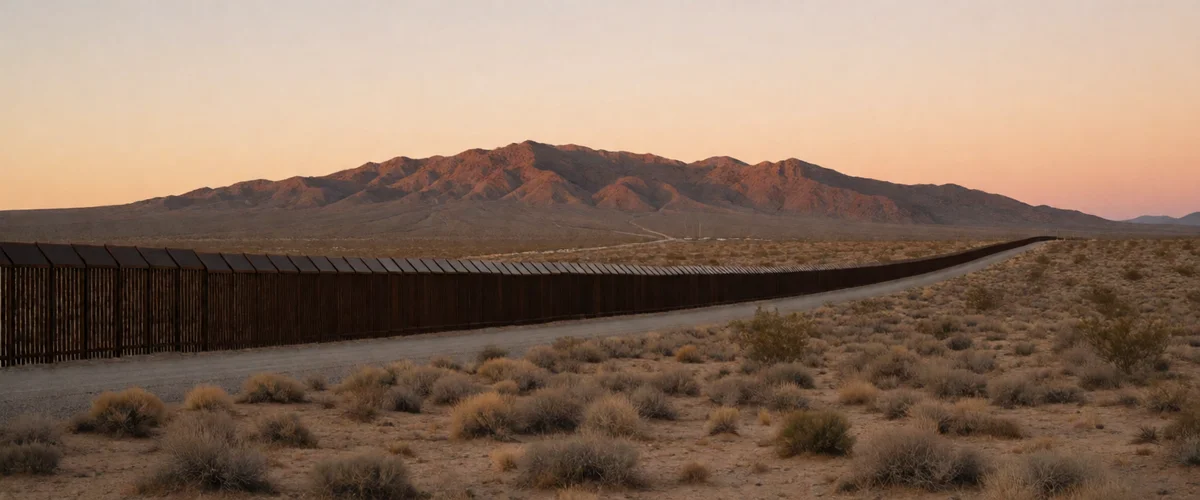
The Supreme Court granted an emergency request on Monday from the Trump administration, clearing the way for construction of a border wall in the Big Bend region of southwest Texas to resume after a lower court blocked it last month.
In an unsigned, five-page ruling, the justices paused an order by the U.S. District Court for the Western District of Texas, which had sided with opponents of the wall and determined that Congress had likely not authorized the government’s sweeping legal waiver. Liberal Justice Ketanji Brown Jackson was the only member of the court to dissent.
The case, Markwayne Mullin, Secretary of Homeland Security, et al. v. Friends of the Ruidosa Church, was brought by the Center for Biological Diversity, a Big Bend river guide and a nonprofit dedicated to preserving a historic church in Ruidosa, Texas. The plaintiffs claim that construction in the Big Bend sector will diminish their ability to use and enjoy the area. The Justice Department argued in its emergency appeal that illegal border crossings and drug seizures in the region made it vulnerable.
The majority found the statute at the center of the dispute decisive. The immigration law that permits the secretary of homeland security to set aside environmental-protection and other conservation laws “reflects a clear preference for expeditious border construction over the very harms respondents assert,” the justices wrote. “The government’s interest therefore outweighs any aesthetic, recreational, and environmental harm alleged by respondents.”
The project as planned would run more than 300 miles through the region, with six-foot-tall vehicle barriers and supporting roads, and 30-foot steel barriers in some areas. The administration relies on a 1996 law that authorizes the homeland security secretary to “waive all legal requirements,” including environmental and conservation protections, in designated areas. The Center for Biological Diversity noted that parts of the sector have seen no documented unauthorized vehicle crossings and where vehicles cannot reach the border, and has argued those stretches should be protected through surveillance technology instead.
Congress approved 46 billion dollars for wall construction, and the Big Bend portion is one section of a wider project. U.S. Customs and Border Protection has built about 12 miles of wall per week across the United States, and Rodney Scott, the CBP commissioner, has said the wall is expected to be completed by the end of the president’s second term.
Monday’s order allows work to advance while the underlying case continues. The Center for Biological Diversity condemned the ruling.