SpaceX Starship Reaches Orbit on Flight 15 as Booster Catch Fails; Orbiter Recovery Attempt Set for Saturday
Seven Lights
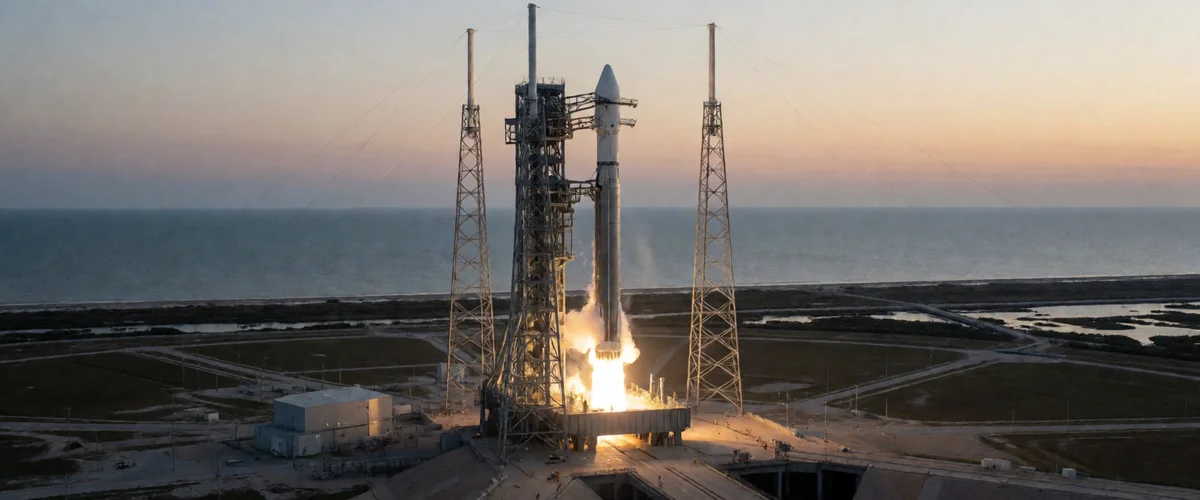
SpaceX launched the 15th flight of its Starship rocket from Starbase, Texas, at 5:47 p.m. Eastern on Friday, sending the orbiter Ship 42 into orbit with 26 next-generation Starlink satellites aboard while losing the planned recovery of its Super Heavy booster. The booster, expected back at the launch pad about six and a half minutes after liftoff for a catch by the tower’s mechanical arms, diverted to an offshore splashdown in the Gulf of Mexico after trouble with some of its engines.
The mission aimed at an unprecedented double: returning both stages intact and ready to fly again. SpaceX has caught the Super Heavy booster from midair in earlier tests, but Flight 15 marks the first attempt to catch the orbiter after a full orbital mission. The Federal Aviation Administration issued the launch license hours before liftoff.
Ship 42 remained aloft after the booster’s loss, on what will be Starship’s longest time in space, nearly a full day and some 14 orbits of Earth. SpaceX planned to fly the orbiter back to Starbase for the tower catch attempt Saturday.
Full reuse of both stages is the commercial core of the program. Recovery and rapid turnaround would let SpaceX loft Starlink satellites, and eventually orbital data centers, in far larger and more frequent batches than its retiring Falcon 9 workhorse. That underpins Elon Musk’s projection of roughly one Starship launch per week in the first half of 2027.
The flight is also essential preparation for NASA’s Artemis program, which seeks to return astronauts to the moon before the end of 2028. A modified Human Landing System version of Starship is intended to carry crews between lunar orbit and the surface, a round trip that requires orbital fuel transfer because the lander cannot carry enough propellant on a single launch.
Flight 14 reached orbit and deployed operational Starlink satellites but ended early when an engine problem forced the orbiter down in the Pacific Ocean. Investigators had not announced findings Friday on the booster’s engine trouble. The orbiter’s return and catch attempt, scheduled for Saturday, will determine whether the mission ends with one stage recovered or none.
Update, Nov. 15: SpaceX caught the Starship upper stage with the arms of the Mechazilla launch tower at about 4:20 p.m. Eastern on Saturday, after roughly 22 hours aloft and some 14 orbits. It was the first time the catch maneuver had been executed on the Ship itself. The booster’s catch remained aborted; the vehicle broke up before impact during its splashdown in the Gulf of Mexico, and the company said it was still determining the cause. The Verge and Engadget reported. Full recovery of both stages again eluded the program, though the Ship catch marked a first.
Update, Nov. 16: Musk said “slight underperformance of engines on this flight is the reason” Super Heavy aborted its catch attempt and diverted to the splashdown where it broke up. Engineers continue to review the booster failure ahead of the next flight.