Wall Street erases post-midterm rally as chip stocks lead $3 trillion wipeout
Seven Lights
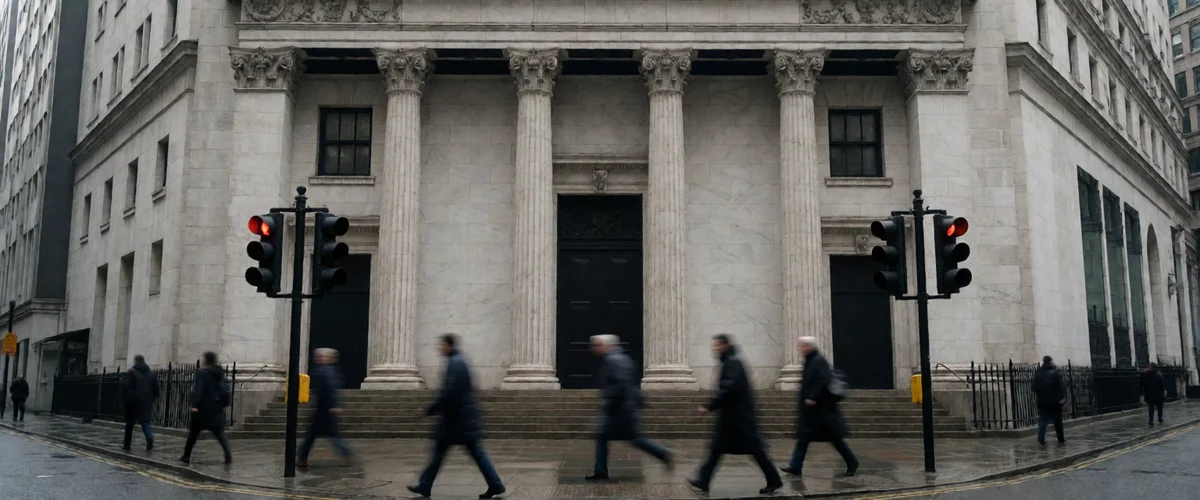
Wall Street erased in one session the rally that followed the midterm elections, with the Nasdaq plunging more than 5 per cent Thursday and falling below 10 per cent from the record set last month, the threshold that places an index in correction territory.
By early afternoon the Nasdaq had dropped 5.2 per cent, the S&P 500 3.8 per cent and the Dow 2.9 per cent, a fall of more than 1,500 points. The S&P 500 touched 7,394.49, below its Election Day close. More than $2 trillion in market value disappeared in the first 60 minutes of trading; by the close, technology stocks had shed roughly $3 trillion. The Dow was heading for its worst second trading day after a midterm in records going back to 1896.
The losses concentrated in the AI trade. The Philadelphia Semiconductor Index fell about 9.75 per cent intraday, its steepest drop since March 2020. Advanced Micro Devices and Micron each lost roughly 15 per cent, Nvidia fell almost 9 per cent, and Qualcomm dropped 10 per cent after reporting a weaker-than-expected earnings outlook. Utilities and equipment suppliers tied to data centers slid with them: Vistra fell 14 per cent and Vertiv 13 per cent on fears of construction moratoriums.
The reckoning had a political date. Democrats took both chambers of Congress on Tuesday, and 41 statewide ballot measures on slowing data-center construction, most of them approved, pointed to voter resistance to the buildout. On Wednesday the market had read the results narrowly, lifting the Dow 1,569 points, or 3 per cent, its best post-midterm day in 44 years, on hopes for consumer-friendly policy. By Thursday the regulatory reading dominated.
Four of the S&P 500’s 11 sectors closed higher, including consumer staples, a sign the selling was sector-specific rather than general. Analysts argued the political pushback could let air out of the AI market without popping it, and some expected permitting delays to fall on speculative projects and smaller operators before reaching the large cloud companies that finance most capacity.
The Nasdaq’s entry into correction marks the sharpest reversal of the year for the trade that carried the market’s gains. The next test comes with chip earnings reports and the first legislative signals from the new Congress.