FCC Approves SpaceX Plan for Up to One Million Data-Center Satellites
Seven Lights
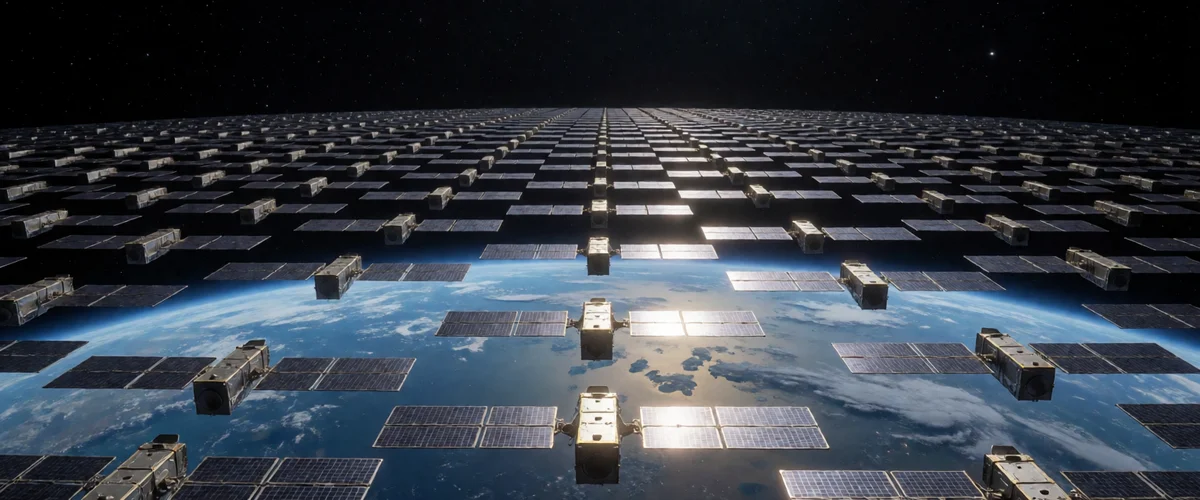
The Federal Communications Commission granted SpaceX conditional approval on Wednesday to deploy and operate a constellation of up to one million satellites for an orbital data-center business, a regulatory victory for Elon Musk’s campaign to move artificial-intelligence computing into space.
The Starmind network would place solar-powered satellites carrying AI processors in low-Earth orbit at altitudes of 500 to 2,000 kilometers. The satellites would communicate with SpaceX’s Starlink constellation and relay data to Earth. SpaceX has said it wants to launch the first Starmind satellite next year.
Under the authorization, deployment must begin no later than November 2033. SpaceX must have 10 per cent of the constellation in orbit by November 2035 and half by November 2038.
The FCC acted over objections from Amazon, Viasat and the American Astronomical Society, which raised concerns about orbital debris and congestion, radiofrequency interference and environmental consequences. Amazon, building a rival to Starlink, called the application deficient in basic detail. It was “a lofty ambition rather than a real plan,” Amazon said, and “risks real harm.” The commission dismissed several objections, including threats to scientific research, on the ground that they fell outside its regulatory authority.
FCC Chairman Brendan Carr said the action “opens a bold new frontier for the computing infrastructure needed to power America’s leadership and growth.” Musk replied on X: “Much appreciated. This will be a great asset to America and the world.” An FCC statement invoked the Kardashev scale, saying the system “promises to bring the human race closer to a Kardashev II civilisation” able to harness the full power of the sun.
Approval does not put data centers in orbit. SpaceX must still cut the cost of building and launching satellites at scale, cool processors in vacuum, and secure financing for chips destined for orbit. The FCC has not approved SpaceX’s plan for debris above 600 kilometers; the company has requested a waiver of the rule requiring satellites below 2,000 kilometers to re-enter within five years of ending their missions.
Rivals including Google and Blue Origin are exploring the same concept, pitched as a cleaner alternative to ground data centers that consume large quantities of power and cooling water. Opponents argue a million satellites would crowd orbits already used by more than 10,000 Starlink spacecraft.